WhatsApp marketing campaigns that keep your number healthy: consent, audience segmentation and pacing
WhatsApp is the best-read marketing channel most businesses have, and the easiest to damage. Consent, audience segmentation and pacing are what keep campaigns working for months, not one launch.
On this page
- Start with consent, not with the list
- Audience segmentation: smaller, sharper, safer
- Pick the template before you pick the date
- Pace: the setting that protects your inbox
- Cost: a campaign is a bill, sent one message at a time
- Measure per recipient, not per campaign
- Protect the data you hold
- A campaign checklist
WhatsApp is the best-read marketing channel most businesses have, and the easiest one to damage. An email that annoys someone goes to a folder. A WhatsApp message that annoys someone can be blocked or reported in one tap — and enough of those taps lower your number’s quality, pause your templates and shrink how many people you may reach.
WhatsApp marketing campaigns that work over months, not just for one launch, are built on three things: an audience you can defend, a pace the team can answer, and a message worth the interruption. This guide covers all three.
Start with consent, not with the list
Before any segmentation, one question decides whether a campaign is safe: did these people agree to hear from you on WhatsApp? A spreadsheet of phone numbers collected for something else is not an audience; it is a liability. Good sources of genuine consent are:
- people who wrote to your number first and asked to be kept informed;
- a form that says, in plain words, that you will contact them on WhatsApp;
- existing customers who opted in during a purchase or a booking.
Keep a do-not-contact list from day one, and make it binding: a campaign build should refuse to send to anyone on it, and should refuse to run at all if the list cannot be read. Sending around a suppression list because a query timed out is the one mistake in marketing that cannot be taken back.
Audience segmentation: smaller, sharper, safer
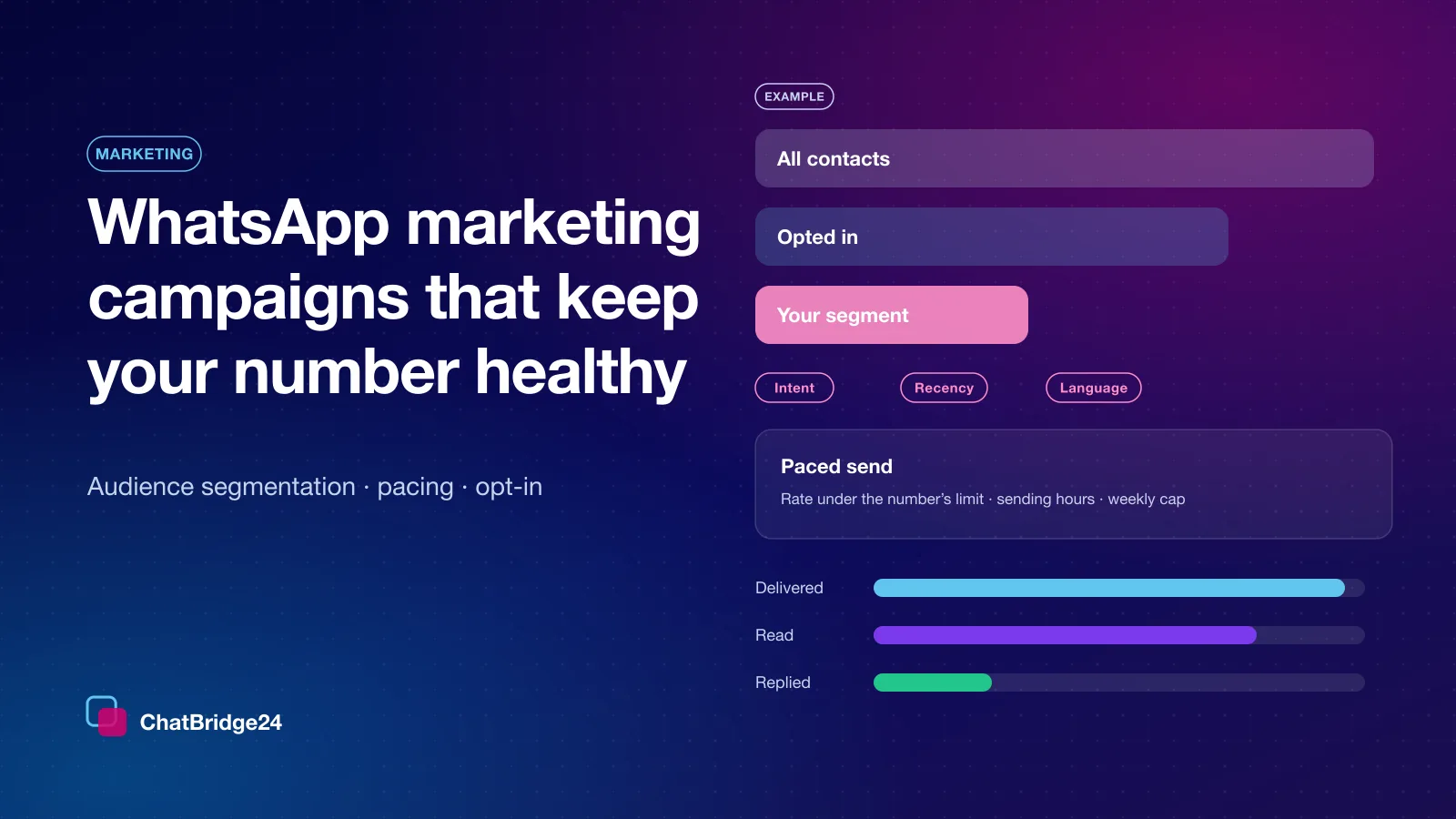
WhatsApp audience segmentation is not a growth trick; it is how a campaign stays relevant enough not to be reported. Three segments outperform one big list almost every time:
- By intent. People who asked about a specific project, product or service, and people who did not.
- By recency. Someone who wrote last week remembers you; someone who wrote eight months ago may not, and is far more likely to block.
- By language and market. A message in the customer’s own language, sent in their own daytime, is a different message from the same text sent to everyone at 09:00 Dubai time.
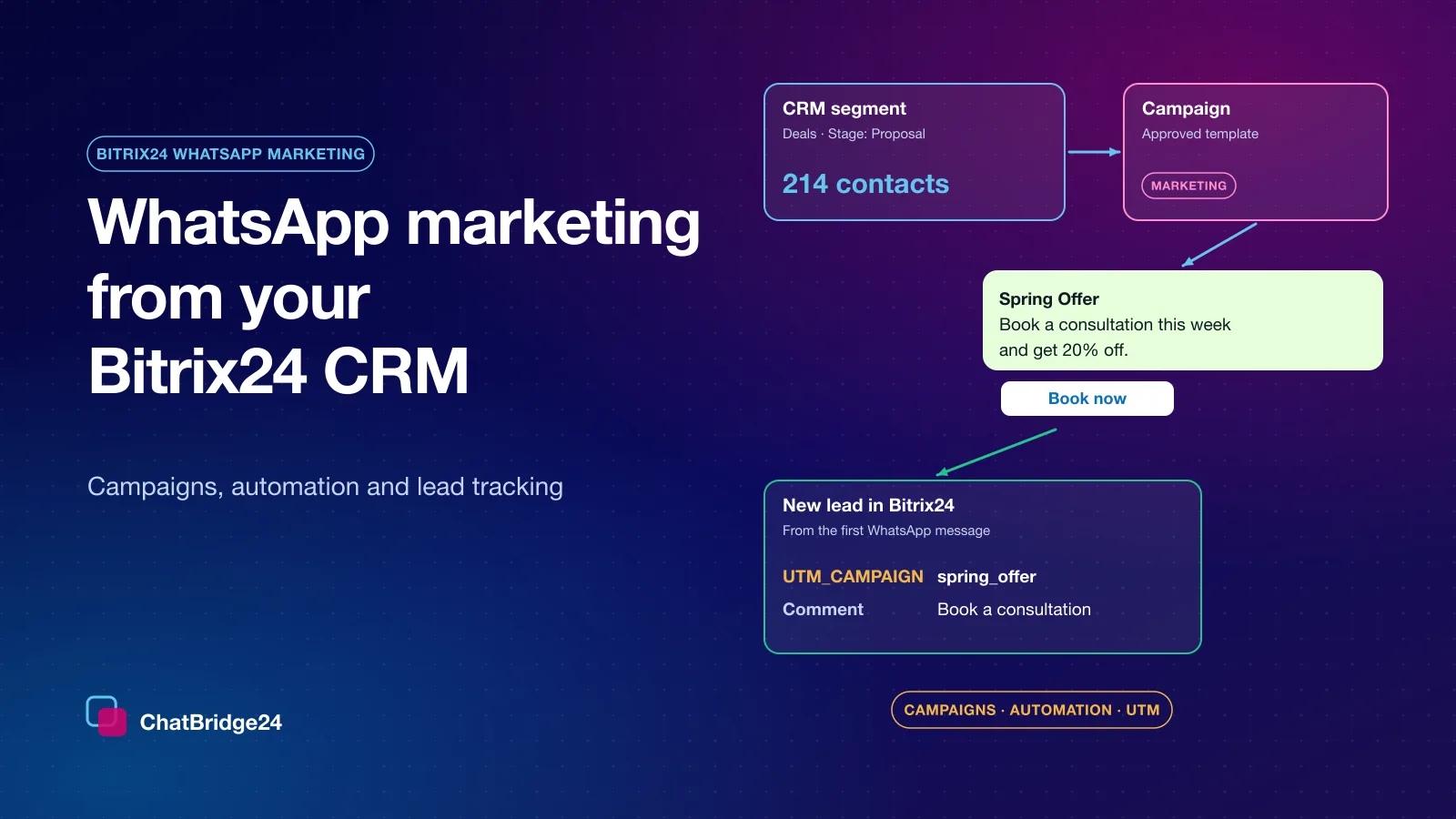
An audience can come from your CRM, a spreadsheet, a pasted list, the number’s own contacts, an earlier campaign’s recipients, or a saved list. Save the segments you reuse. A saved filter refreshes and picks up new people; a saved list is exactly the people who were in it when you saved it — choose deliberately.
Pick the template before you pick the date
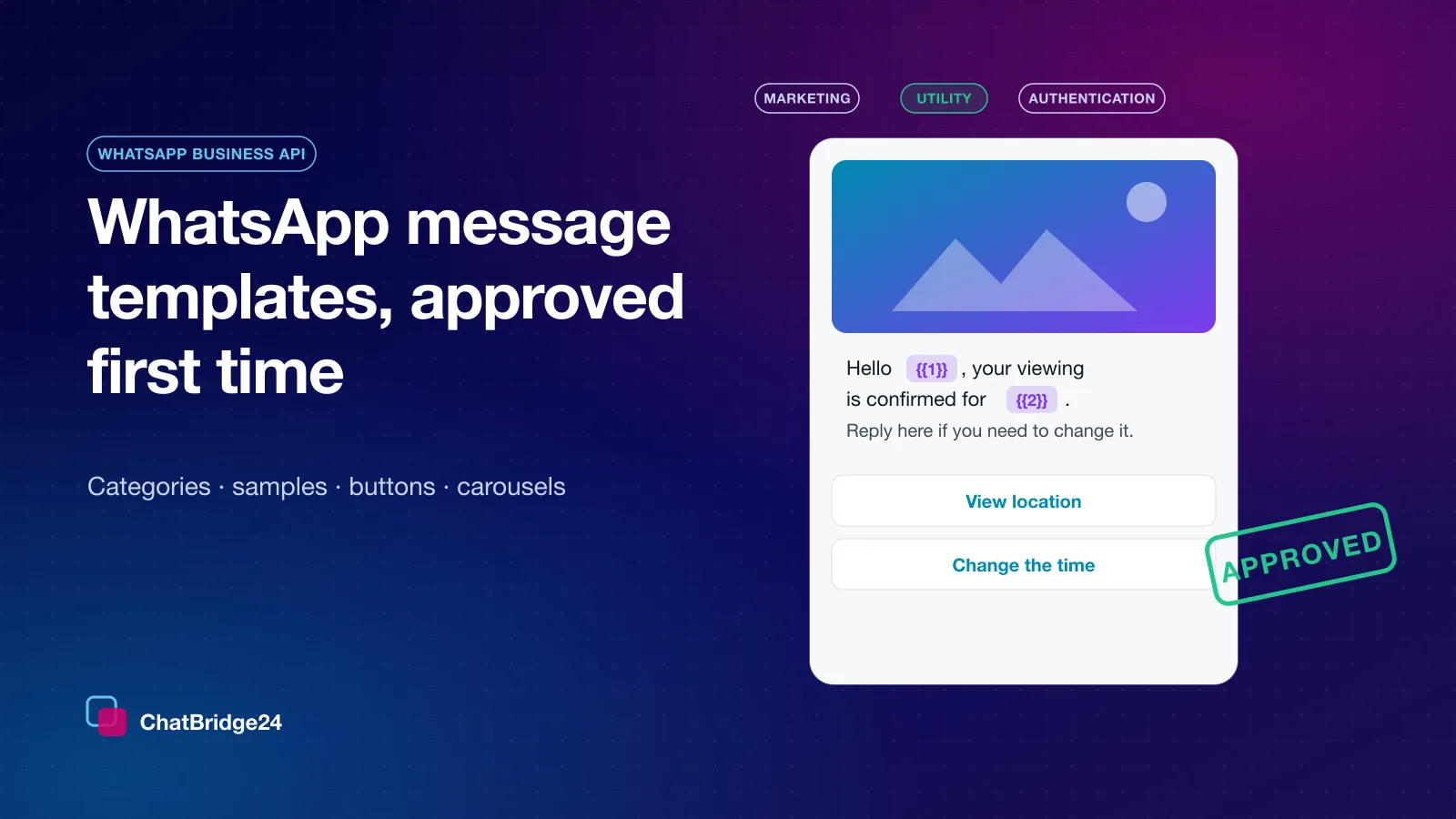
Every campaign message is a marketing template, approved by Meta in advance. Get the template approved before you announce the campaign internally, not on the morning it is meant to go. The WhatsApp message templates guide covers the rejection reasons that cost the most time.
Fill each value from the recipient’s own data where you can — their name, the project they asked about — and check how the message reads with an empty value before it reaches a thousand people as “Hi , we have news”.
Pace: the setting that protects your inbox
A campaign that sends as fast as possible creates two problems. It can exceed what the number is allowed to send, and it produces a wave of replies that nobody can answer — which is the worst first impression a campaign can make. Three controls fix that:
- A per-campaign rate that sits beneath the number’s own limit, so the campaign never spends the capacity the inbox needs to answer its own replies.
- Sending hours, so messages land when people are awake and your team is working.
- A frequency cap, so one person is not contacted by three campaigns in a week.
The honest consequence is that a large list takes hours rather than minutes. That is the point: the replies arrive at a rate your team inbox can handle.
Cost: a campaign is a bill, sent one message at a time
Meta charges per delivered marketing message, at its own published rate for the recipient’s market, under its per-message model. Before you send to a large segment, work out what it will cost — the rules and dates are set out in our WhatsApp Business API pricing page. Two practical rules follow:
- A smaller, sharper segment is cheaper and better. You pay for every delivery, including the ones to people who were never going to reply.
- A send is never charged twice by a retry. A campaign claims each recipient before any money moves, so a server restart mid-campaign resumes rather than repeats.
Meta may also decline to deliver a marketing message to someone who has received many from businesses recently. That is not a fault on your side, and it is one more reason to send fewer, better messages.
Measure per recipient, not per campaign
“Sent to 4,000” is not a result. What matters is, for each recipient: delivered or not, read or not, replied or not — and for the failures, why. Group the failures by reason, because two hundred rows saying the same thing is one problem, not two hundred. Then let the outcome feed the next segment: readers who replied form your warmest audience for the next launch; people who never opened three campaigns in a row should leave the list.
Protect the data you hold
A campaign audience is personal data. Keep it where it is protected, export only what you need, and know where it is held and for how long — our approach is on the WhatsApp data protection page.
A campaign checklist
- Everyone in the audience opted in to WhatsApp contact.
- The do-not-contact list is applied and cannot be bypassed.
- The segment is defined by intent, recency or language — not “everyone”.
- The template is approved and reads well with every value empty or filled.
- The pace, sending hours and frequency cap are set.
- The team knows the campaign is going out and when replies will arrive.
- After it runs, failures are reviewed by reason and the segment is refined.
Campaigns are part of the Enterprise plan, alongside everything in Professional — the details are on ChatBridge24 pricing.
Common questions
How many people should a WhatsApp campaign go to?
As few as the message is genuinely relevant to. A smaller segment by intent, recency and language costs less and is reported less than one large list.
Can a campaign send the same message twice after a server restart?
No. Each recipient is claimed before any money moves, so a restart resumes the campaign rather than repeating it.
Why was a marketing message not delivered?
Meta may decline to deliver a marketing message to someone who has received many from businesses recently, or the recipient may have blocked the number. Each failure carries its own reason.